Introduction: Why Pipe Bending Technology Matters in Today’s Manufacturing Industry
In many manufacturing sectors, pipes and tubes are not simply standard metal components. They are precision parts that need to match complex product designs, strict dimensional requirements, and demanding operating conditions.
From automotive exhaust systems and aerospace structures to HVAC equipment and industrial machinery, accurately shaped pipes directly influence product performance and assembly efficiency.
However, traditional manual bending methods often face challenges such as:
· Inconsistent bending angles
· Higher labor dependency
· Material waste
· Lower production efficiency
· Difficulty handling complex shapes
This is why more manufacturers are turning to Pipe Bending Machines.
Modern pipe bending equipment combines mechanical systems, hydraulic control, and CNC technology to achieve more accurate and repeatable bending processes. For companies looking to improve production efficiency and maintain stable product quality, advanced bending machines have become an important part of modern manufacturing.
As manufacturing industries continue moving toward automation and precision production, reliable pipe bending solutions are playing a larger role in global supply chains.
Table of Contents
· What Are Pipe Bending Machines?
· How Modern Pipe Bending Machines Work
· Why Manufacturers Need Advanced Pipe Bending Equipment
· Key Advantages of CNC and Automatic Pipe Bending Machines
· Pipe Bending Machine Types and Applications
· Pipe Bending Machines Performance Comparison
· Important Factors When Selecting Pipe Bending Equipment
· Global Trends Driving Pipe Bending Technology Development
· How XYP Machinery Supports Industrial Bending Solutions
· Frequently Asked Questions
What Are Pipe Bending Machines?
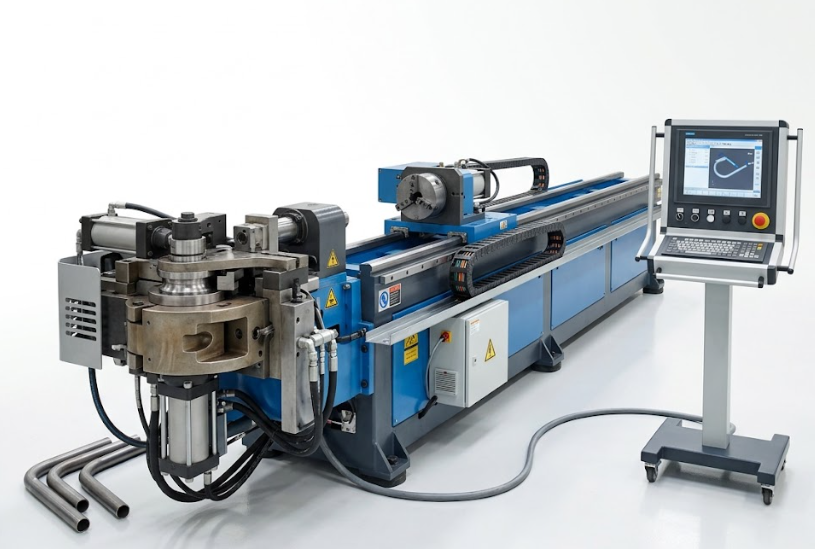
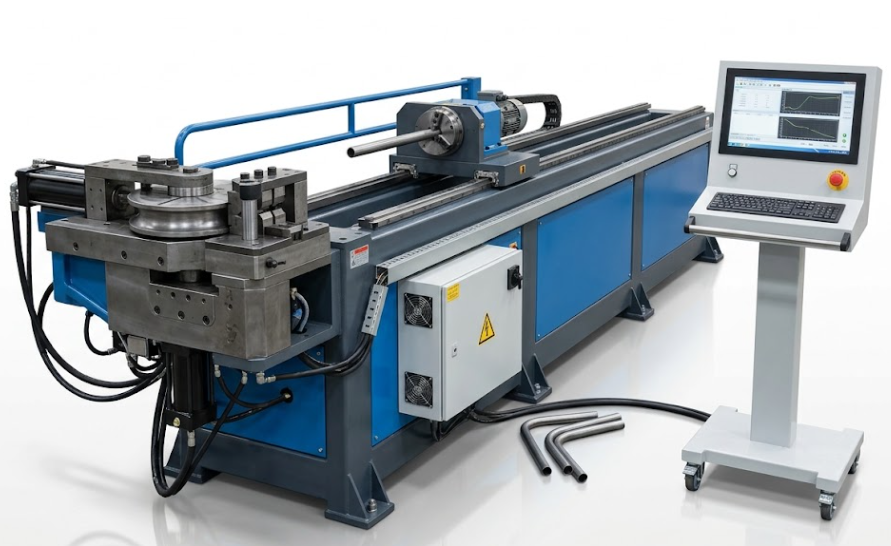
Pipe Bending Machines are industrial machines designed to reshape metal pipes and tubes into specific angles and curves without damaging the material structure.
Unlike manual bending methods, modern machines use controlled mechanical systems to achieve consistent results across large production volumes.
A typical pipe bending machine includes:
· CNC control system
· Hydraulic or electric drive system
· Bending die
· Clamping mechanism
· Feeding system
· Rotation system
The machine controls important parameters such as:
· Bending angle
· Tube position
· Rotation direction
· Processing speed
· Repetition accuracy
This allows manufacturers to produce complex tube shapes while maintaining stable quality.
Modern pipe bending technology is widely used in industries where precision and reliability are critical.
How Modern Pipe Bending Machines Work
The bending process involves several coordinated steps.
Tube Loading and Positioning
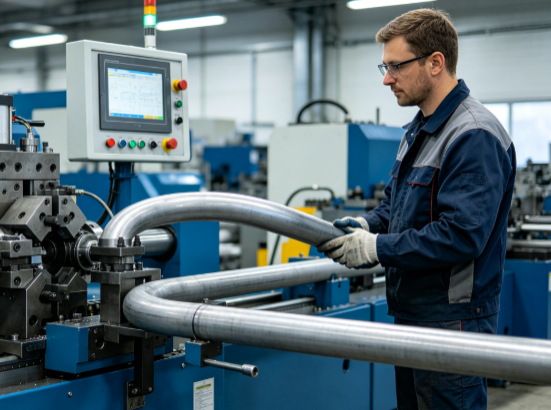
The operator or automatic feeding system places the pipe into the machine.
Accurate positioning is important because even small deviations can affect the final bending result.
Clamping and Fixing
The machine securely holds the pipe during processing.
This prevents unwanted movement and helps maintain bending accuracy.
Controlled Bending Operation
The bending die applies controlled force to reshape the pipe.
Advanced systems monitor the process to reduce:
· Surface deformation
· Cracking risks
· Dimensional errors
Finished Component Output
After bending, the finished pipe is removed for inspection or additional processing.
For automated production lines, the entire process can be integrated with other manufacturing systems.
Why Manufacturers Need Advanced Pipe Bending Equipment
Manufacturing industries are becoming more competitive.
Companies need equipment that can provide:
· Higher productivity
· Better accuracy
· Lower operating costs
· Stable production quality
Improving Production Efficiency
Manual pipe bending requires significant operator involvement.
For high-volume manufacturing, this creates limitations.
Automatic and CNC pipe bending machines help improve efficiency through:
· Programmable operations
· Faster processing cycles
· Reduced manual adjustment
This allows manufacturers to increase output while maintaining consistency.
Achieving Higher Precision
Precision is one of the most important requirements in pipe processing.
Industries such as automotive and aerospace often require strict dimensional accuracy because components must fit perfectly during assembly.
Modern pipe bending machines help control:
· Bending radius
· Angle accuracy
· Repeatability
Reducing Material Waste
Incorrect bending can lead to:
· Deformed tubes
· Rejected parts
· Additional material costs
Advanced bending systems optimize the process and help manufacturers reduce unnecessary waste.
Manufacturing Requirement | Traditional Bending Challenge | Modern Pipe Bending Solution |
High accuracy | Results depend heavily on operator skills | CNC-controlled precision processing |
Mass production | Limited production speed | Automated operation capability |
Complex shapes | Difficult manual adjustment | Programmable bending processes |
Cost control | Higher waste and labor costs | Improved efficiency and repeatability |
Key Advantages of CNC and Automatic Pipe Bending Machines
High Repeatability
For large production projects, consistency is essential.
CNC pipe bending machines can store processing programs and reproduce the same bending results repeatedly.
This is especially valuable for industries producing thousands of similar components.
Flexible Production Capability
Modern machines can handle different pipe shapes and specifications.
Manufacturers can adjust:
· Bending parameters
· Tube dimensions
· Processing programs
This flexibility helps companies respond to different customer requirements.
Better Surface Protection
Quality bending equipment helps minimize problems such as:
· Tube flattening
· Surface damage
· Irregular deformation
This is important for applications where appearance and structural performance matter.
Improved Automation Integration
Many modern factories are moving toward smart manufacturing.
Pipe bending equipment can be integrated with:
· Automated feeding systems
· Production monitoring
· Digital manufacturing platforms
This supports more efficient factory operations.
Pipe Bending Machine Types and Applications
Different industries require different bending solutions.
CNC Pipe Bending Machines
CNC pipe bending machines are designed for high-precision production.
Advantages include:
· Programmable operation
· High accuracy
· Strong repeatability
Common applications:
· Automotive components
· Aerospace tubing
· Precision industrial parts
Hydraulic Pipe Bending Machines
Hydraulic systems provide strong bending force.
They are suitable for:
· Heavy-duty pipes
· Industrial applications
· Larger diameter tubes
Automatic Pipe Bending Machines
Automatic systems focus on improving production efficiency.
They are commonly used in factories requiring:
· High output
· Stable production
· Reduced manual operation
Pipe Bending Machines Performance Comparison
Machine Type | Advantages | Suitable Applications |
CNC Pipe Bending Machines | High precision, programmable control, repeatable production | Automotive, aerospace, precision manufacturing |
Hydraulic Pipe Bending Machines | Strong force and heavy-duty capability | Industrial pipes and large components |
Automatic Pipe Bending Machines | Efficient production and reduced labor requirements | High-volume manufacturing |
Manual Pipe Bending Machines | Simple operation and lower investment | Small-scale production |
The best equipment choice depends on factors such as production volume, pipe material, required accuracy, and application requirements.
Important Factors When Selecting Pipe Bending Equipment
Choosing the right pipe bending machine requires careful evaluation.
Bending Accuracy
Accuracy directly affects final product quality.
Manufacturers should evaluate:
· Angle control
· Repeatability
· Dimensional stability
Machine Structure and Durability
Industrial equipment operates under demanding conditions.
Important considerations include:
· Mechanical strength
· Component quality
· Long-term reliability
Automation Level
Different factories have different production requirements.
Companies should consider whether they need:
· Semi-automatic operation
· Fully automatic systems
· CNC programming capability
Maintenance and Technical Support
Reliable after-sales support helps reduce downtime.
Important factors include:
· Spare parts availability
· Technical service
· Operator training support
Selection Factor | Why It Matters |
Processing accuracy | Ensures consistent product quality |
Machine stability | Reduces production interruptions |
Automation capability | Improves manufacturing efficiency |
Maintenance support | Extends equipment service life |
Global Trends Driving Pipe Bending Technology Development
The pipe bending equipment industry is closely connected with global manufacturing trends.
Growth of Automotive Manufacturing
Automotive manufacturers increasingly require precision tube components.
Applications include:
· Exhaust systems
· Chassis components
· Fuel systems
· Structural parts
As vehicle designs become more complex, demand for accurate bending technology continues increasing.
Expansion of Smart Manufacturing
Manufacturers worldwide are investing in automation.
Smart factories require equipment that can provide:
· Digital control
· Data monitoring
· Production consistency
This trend is encouraging more companies to adopt CNC and automatic pipe bending machines.
Lightweight Material Processing
Modern industries are using more lightweight materials to improve efficiency.
This creates new challenges for tube processing because thinner materials require more precise bending control.
Advanced pipe bending machines help manufacturers process these materials with better accuracy.
How XYP Machinery Supports Industrial Bending Solutions
Modern manufacturers need equipment suppliers that understand both machine performance and production requirements.
XYP Machinery focuses on providing pipe bending equipment solutions designed for industrial applications.
Through reliable Pipe Bending Machines, the company supports customers seeking:
· Stable production performance
· Precision tube processing
· Efficient manufacturing operations
As global industries continue moving toward automation and precision manufacturing, advanced pipe bending technology will remain an important part of industrial production.
Frequently Asked Questions
1. What industries use Pipe Bending Machines?
Pipe Bending Machines are widely used in automotive, aerospace, HVAC, furniture, construction equipment, and industrial manufacturing industries.
2. What is the difference between CNC and traditional pipe bending machines?
CNC pipe bending machines use programmable control systems to achieve higher precision, repeatability, and production efficiency compared with manual methods.
3. How do pipe bending machines improve manufacturing efficiency?
They reduce manual operations, improve production speed, maintain consistent quality, and reduce material waste.
4. What should buyers consider when choosing a pipe bending machine?
Important factors include bending accuracy, machine durability, automation level, production requirements, and technical support.
Conclusion
The manufacturing industry is moving toward higher precision, greater automation, and improved production efficiency.
Pipe Bending Machines have become essential equipment for companies that require accurate and repeatable tube processing.
From automotive components to industrial applications, advanced bending technology helps manufacturers reduce waste, improve productivity, and maintain consistent product quality.
For businesses looking to upgrade their metal fabrication capabilities, selecting the right pipe bending equipment partner can create long-term advantages in production performance and market competitiveness.