Selecting a CNC tube bending machine supplier is a process decision, not only a machine-price decision. The right supplier helps you match tube size, wall thickness, bend radius, axis control, tooling, and production volume before a machine is built. This guide explains the practical questions manufacturers should answer when comparing suppliers for automotive, furniture, agricultural machinery, HVAC, fitness equipment, new energy, and other tube-processing work.
Contents
1. Define the tube bending job, 2. Match machine capacity to the part, 3. Understand axes and tooling, 4. Evaluate supplier support, 5. Prepare a useful RFQ, 6. Frequently asked questions
Define the Tube Bending Job Before Comparing Machines
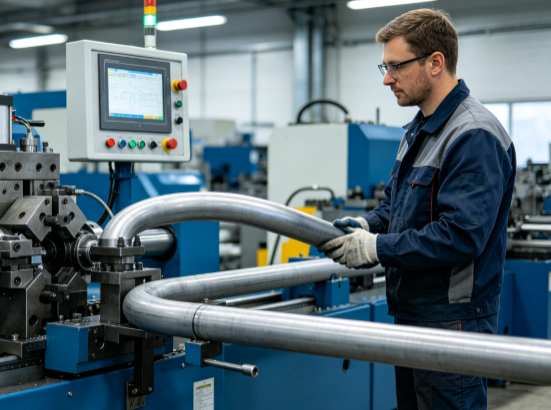
Start with the actual tube and finished part. Record outside diameter, wall thickness, material, straight length, number of bends, bend angles, centerline radius, and the required tolerance. Also note whether the tube is round, square, rectangular, or another profile. These details affect clamping, mandrel selection, die design, lubrication, springback control, and the machine size that makes sense.
Production conditions matter just as much. A prototype line may value quick setup and flexible tooling, while a repeat automotive program may prioritize automatic feeding, multi-axis movement, multi-stack dies, and stable cycle time. A supplier cannot recommend a useful configuration from outside diameter alone. Send a drawing or representative sample and explain the expected annual or monthly quantity.
Input to provide | Why it matters | Question to confirm |
Tube material and grade | Changes springback, forming load, and tooling wear. | Has the material been bent successfully with this method? |
Outside diameter and wall | Defines capacity and risk of collapse or marking. | What is the working range for this material? |
Bend radius and angles | Determines die, mandrel, and axis requirements. | Are single or multiple radii needed? |
Part volume and mix | Guides automation, setup time, and spare tooling. | Will several part numbers share the machine? |
Required tolerance | Defines measurement and trial-bending work. | How will the approved sample become the reference? |
Match Machine Capacity to the Part
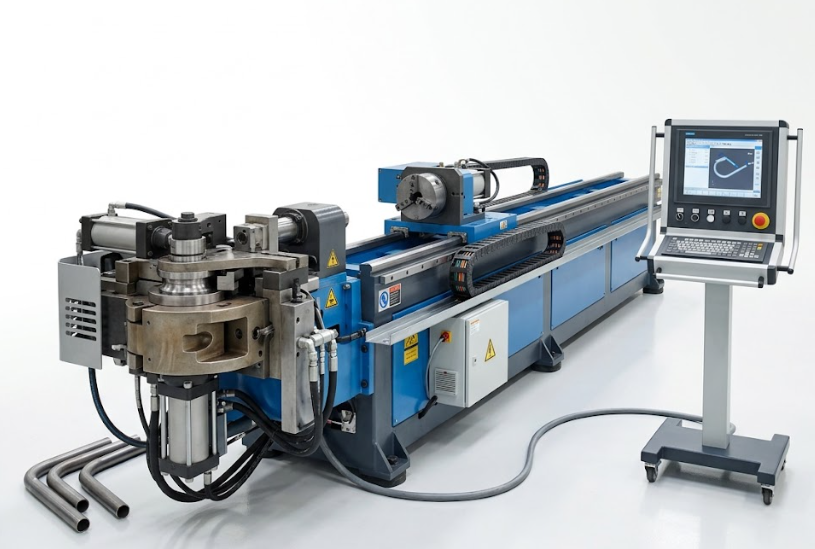
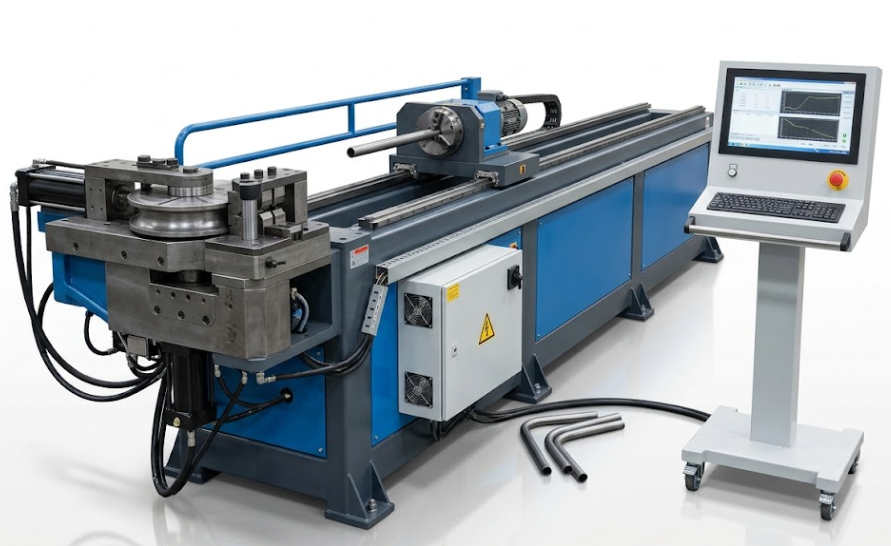
XYP’s public product range shows CNC and hydraulic bending options across different capacities. The published bending table lists models from DW18 through DW168 and a DW325 capability, with maximum outside diameters, wall-thickness references, and typical 1D–3D or 1.5D–3D radius ranges. The product page also notes that specifications can vary with tube material, so buyers should treat the table as a starting point and confirm the complete technical proposal for the actual part.
For example, a 50 mm tube program may not need the same machine architecture as a 130 mm or 168 mm heavy-duty application. Larger tubes can require longer mandrel working distance, higher forming force, stronger clamping, and more careful handling. Choosing a machine with unused capacity can increase investment and tooling cost; choosing one too close to the limit can restrict future parts. Ask the supplier to show the proposed working range and the assumptions behind it.
Understand Axes, Dies, and Tooling
Axis count should be linked to the part, not used as a prestige number. XYP lists 2-axis, 3-axis, 4-axis, and 6-axis CNC models. A 3-axis machine can suit many standard bending sequences. Additional servo axes may help when the part requires complex positioning, multiple planes, variable rotation, or more than one bending radius. Multi-stack die arrangements can reduce tooling changes when a part family uses different radii.
Tooling deserves the same attention as the machine frame. Confirm the bending die, pressure die, clamp die, wiper die, mandrel, and any special inserts required for your tube. Ask who designs the tooling, how the trial parts are evaluated, and which dimensions are included in the quotation. A capable CNC tube bending machine supplier should discuss the full forming system, not only the controller and motor specification.
Evaluate Supplier Engineering and After-Sales Support
XYP states that it provides equipment and mold solutions based on pipe material, specifications, and process requirements. Its public site also describes CE-certified equipment, remote or on-site commissioning and maintenance, and technical training for overseas customers. These statements should become specific items in the quotation: scope of installation, training hours, language of manuals, response channel, spare-parts availability, and what support is included after acceptance.
Ask for a sample-bending plan before purchase. It should identify the supplied material, target part, tooling, inspection method, and acceptance criteria. A short trial with the real tube can reveal springback, surface marking, ovality, and feeding issues that a brochure cannot show. Keep the approved sample, drawing revision, and parameter backup with the purchase record so repeat production has a controlled reference.
Prepare a Useful RFQ
A practical RFQ should include part drawings, tube samples or material data, bend schedules, expected quantity, tolerance, loading method, available utilities, factory space, delivery location, and preferred automation level. State whether you need a single machine for several parts or a dedicated line. Ask suppliers to separate machine price, tooling, sample trials, installation, training, packaging, freight, and optional accessories.
Compare quotations on the same scope. A lower price may exclude dies, mandrels, commissioning, or production trials. Request the machine model, maximum tube range, axis configuration, control system, working distance, repeatability statement, and recommended spare parts in writing. This makes it easier to compare a CNC tube bending machine supplier on usable production value rather than headline price.
Frequently Asked Questions
What information should I send first?
Send a part drawing or sample, tube material, outside diameter, wall thickness, bend radius, bend sequence, tolerance, and expected quantity. Photos alone are rarely enough for a reliable configuration.
Is a hydraulic or CNC machine more suitable?
It depends on part mix and production needs. Hydraulic NC equipment can be practical for simpler, lower-volume work, while CNC servo equipment is generally considered when repeatability, automation, and complex positioning are important.
Do I need a multi-stack die?
Consider it when one part or a part family uses multiple radii and frequent tooling changes would interrupt production. Confirm the actual die arrangement with the supplier.
Summary
A sound machine decision begins with the tube, part drawing, and production route. Confirm capacity, wall thickness, radius, axis control, tooling, trial bending, and support scope before comparing prices. A detailed RFQ gives a CNC tube bending machine supplier enough evidence to recommend a workable configuration and gives your team a clear reference for acceptance and repeat production.